How IT Strategy Can Help Your Business Grow Faster and Smarter
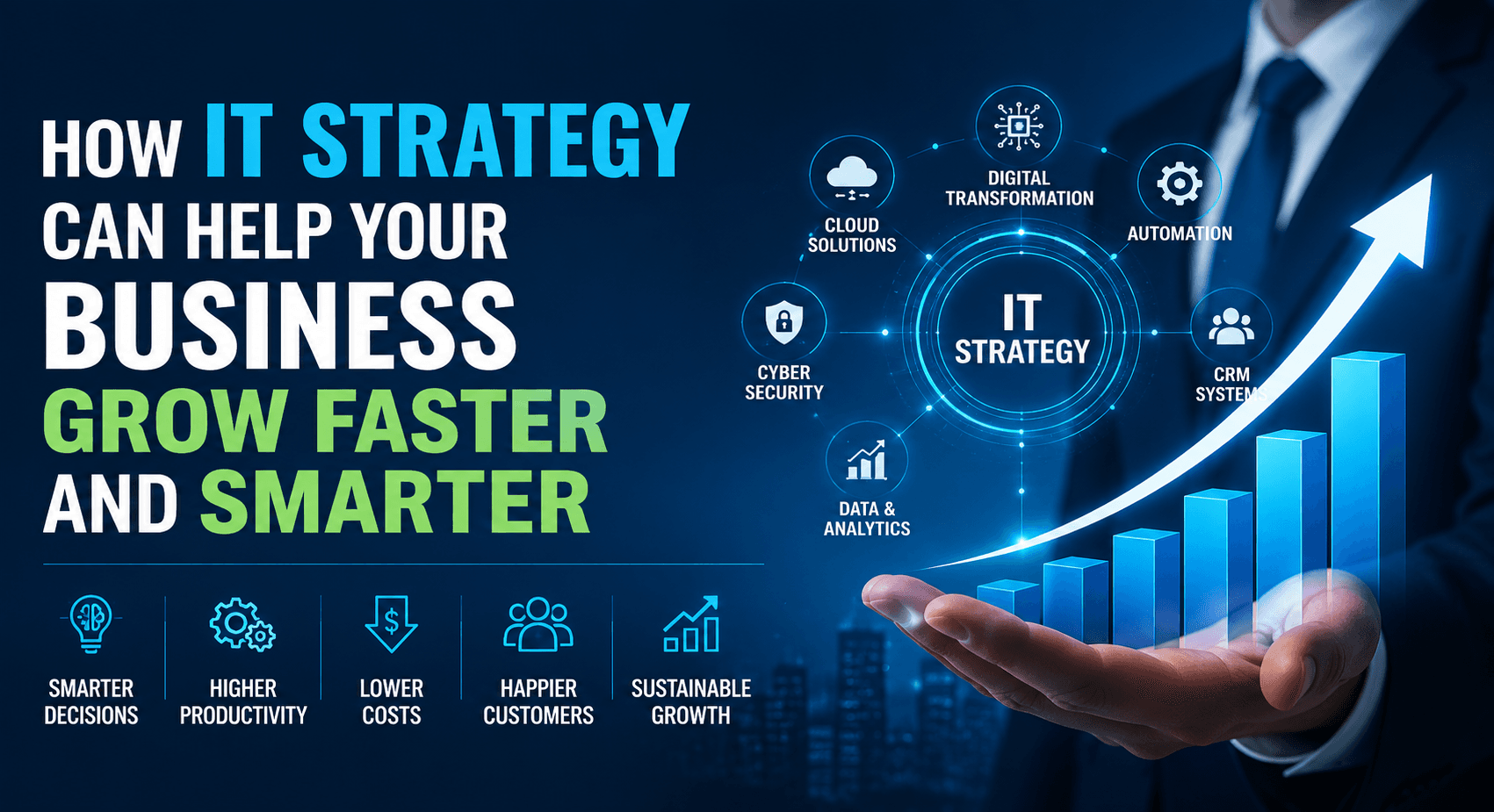
Most businesses spend money on technology. Very few spend time thinking about what that technology is actually supposed to achieve.
There's a difference between buying software and building a technology strategy. One is a transaction. The other is a decision that shapes how fast your business can grow, how well your team can execute, and how resilient you'll be when conditions change. Understanding that difference is what this guide is about.
I was working with a trading company in Chittagong two years ago. They had invested in an ERP system, a standalone HR tool, a separate accounting package, and a customer database in Excel — all purchased independently, none of them talking to each other. The IT spend was substantial. But every month-end report required someone to manually pull data from four different places and reconcile it in a spreadsheet. Decisions were slow because information was always fragmented. The investment hadn't created leverage — it had created complexity.
What that company needed wasn't more software. It needed an IT strategy — a deliberate plan that aligned their technology decisions to their actual business goals. Once we mapped that out and consolidated their systems, their reporting time dropped from three days to four hours. Their sales team had real-time inventory visibility for the first time. And their management could make decisions on Monday morning based on Friday's actual numbers.
That's what a real IT strategy does. It doesn't just solve technical problems — it removes the friction that's been quietly slowing everything down.
What IT Strategy Actually Means
IT strategy is not a list of tools you plan to buy. It's a framework that answers three fundamental questions: Where is the business trying to go? What does the technology need to do to help get there? And what needs to change — in systems, processes, or capabilities — to make that happen?
A genuine IT strategy connects technology decisions to business outcomes. It means that when you're deciding whether to implement a CRM, you're not just asking "which CRM is best?" — you're asking "what does our sales process need to look like in 18 months, and which system best supports that?" When you're evaluating cloud infrastructure, you're not comparing server specs — you're asking "what level of reliability, security, and scalability does our growth plan require?"
That shift in framing — from technical decisions to strategic ones — is what separates businesses that get results from technology from businesses that simply accumulate it.
Technology without strategy is just expensive infrastructure. Strategy without technology is ambition without execution. The businesses growing fastest have learned to treat the two as inseparable.
The Four Pillars of a Business-Aligned IT Strategy
Regardless of industry or company size, a sound IT strategy for a growing business rests on four interconnected pillars. When any one of these is missing, the others underperform.
How IT Strategy Directly Drives Business Growth
The connection between IT strategy and business growth isn't abstract. It shows up in specific, measurable ways across every part of the business. Here's how the link plays out in practice:
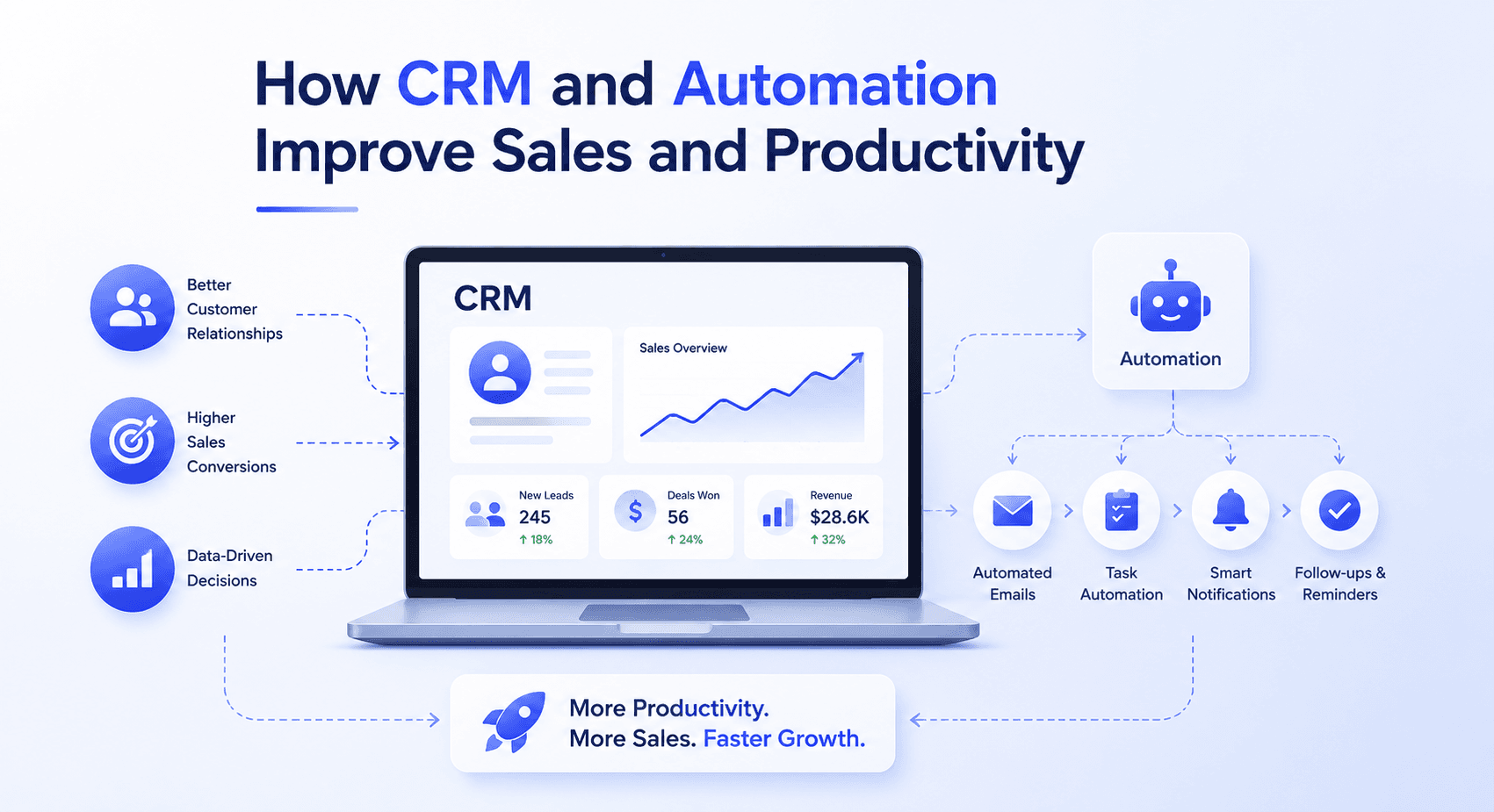
A well-configured CRM with automated lead follow-up, proposal generation, and pipeline tracking consistently shortens sales cycles by 20–35%. When your sales team has full visibility into each prospect's journey and can respond to leads within minutes instead of hours, conversion rates improve significantly. That's a direct revenue impact — not from hiring more salespeople, but from making the existing team dramatically more effective.
Every manual process in your business has a cost — staff time, error rates, and the management overhead needed to supervise it. Businesses that have run a proper IT audit almost always discover significant redundant spend: duplicate software subscriptions, manual data processing that a ৳15,000/month system could handle automatically, or infrastructure they're paying for and not using. IT strategy brings these costs into view and eliminates them systematically.
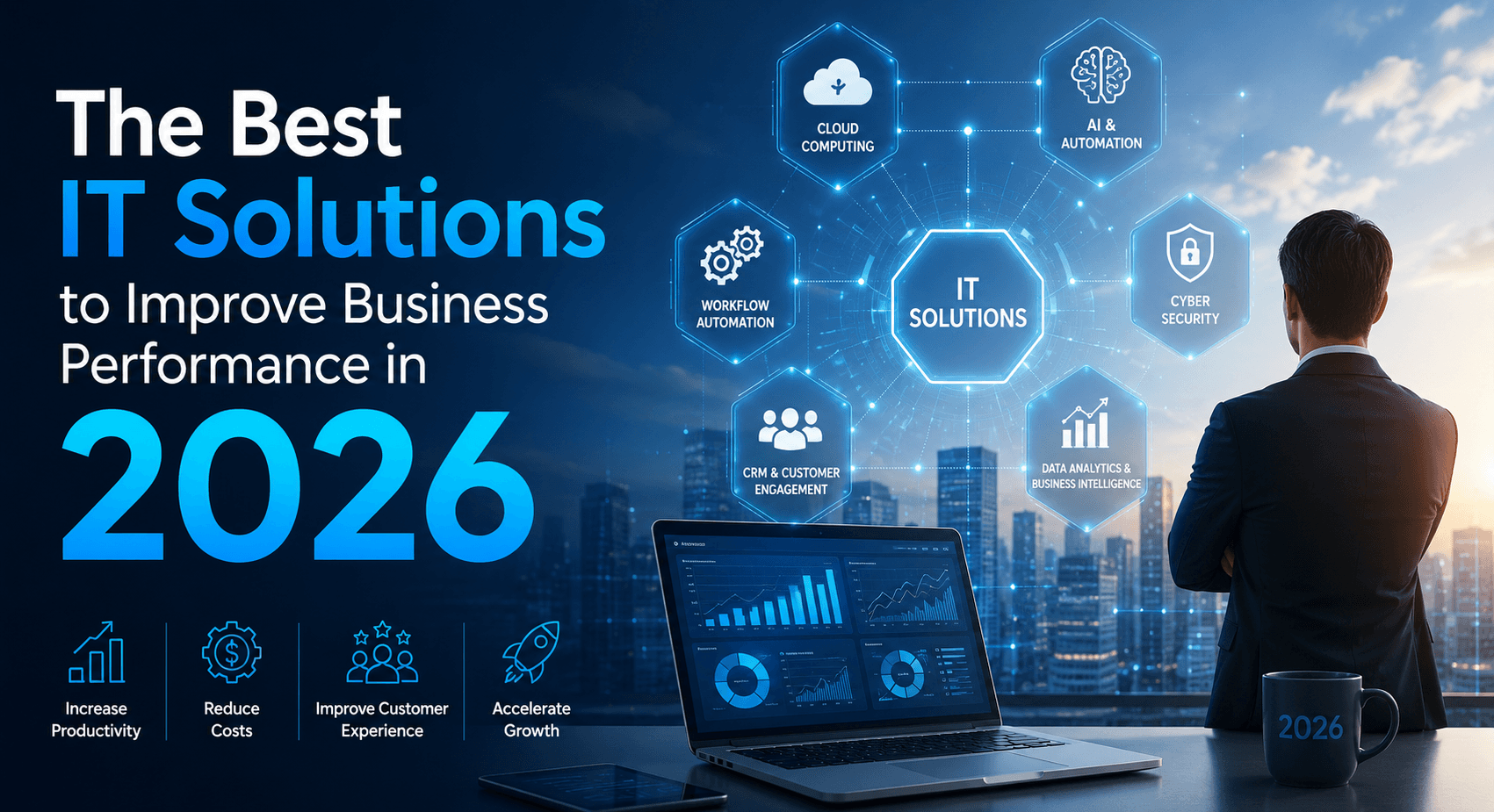
In 2026, customer experience is increasingly determined by technology — how fast you respond, how accurately you fulfill orders, how well you communicate, and how personalised your follow-up feels. Businesses with integrated customer data, automated communication workflows, and real-time order visibility consistently outperform competitors on the metrics that drive repeat business and referrals. IT strategy makes those capabilities accessible to businesses of all sizes, not just enterprise players.
The most significant leverage an IT strategy provides is the ability to grow revenue without growing headcount at the same rate. When your systems handle order processing, inventory management, customer communication, and reporting automatically, a team of ten can do what previously required twenty-five. That's not a technology fantasy — it's what businesses with mature IT strategies are actually experiencing, and the gap between them and manual operators is widening every year.
Most business mistakes are information failures — decisions made on incomplete, outdated, or inaccurate data. When your IT infrastructure gives management real-time visibility into the numbers that matter, decisions improve. You see inventory problems before they become stockouts. You see which customers are at risk before they churn. You see which product lines are profitable and which are quietly draining margin. That visibility is what turns gut-feel management into evidence-based leadership.
IT Strategy vs IT Spending: The Critical Difference
- Technology purchased reactively to solve immediate problems
- Multiple disconnected systems with no integration
- Duplicate data entry across tools and spreadsheets
- No visibility into total technology spend or ROI
- IT decisions made by whoever asks loudest
- Systems that don't scale — rebuilt every few years
- Security handled reactively after incidents occur
- Staff using only 20–30% of system capabilities
- Technology decisions mapped to 12–24 month business goals
- Integrated systems sharing data across departments
- Single source of truth for customers, inventory, finances
- Clear view of technology ROI and budget allocation
- IT roadmap aligned to leadership priorities
- Infrastructure that scales with growth by design
- Proactive security, backups, and business continuity
- Training plans that maximise system adoption
Which Businesses in Bangladesh Benefit Most from IT Strategy?
The honest answer is: any business that has outgrown its current systems but hasn't yet built the structure to scale. That includes a much wider range of organisations than most people expect.
For mid-size businesses that need strategic IT leadership but aren't ready to hire a full-time CTO or Head of IT, a fractional engagement provides exactly that — senior-level technology strategy, vendor management, team oversight, and implementation guidance at a fraction of the cost. It's one of the fastest-growing service models in Bangladesh's business technology sector, particularly among companies in the ৳5 crore to ৳50 crore revenue range.
What a Practical IT Strategy Engagement Looks Like
The starting point is always an honest assessment of where you are right now — not where you think you are, but where the systems and data actually show you to be. That means mapping every tool in use, understanding how data flows (or doesn't) between them, identifying where the team is working around system limitations, and calculating the real cost of the current state.
From there, a 12-month IT roadmap is built that sequences changes in order of business impact — quick wins that reduce pain and build momentum, followed by foundational changes that enable the next phase of growth. The roadmap isn't a technology wishlist. It's a prioritised plan with clear outcomes, timelines, and cost projections for each initiative.
Implementation then follows in stages — starting with the changes that deliver the highest return fastest, building internal capability as you go, and measuring results at each phase so the roadmap can be refined as the business evolves. Good IT strategy is iterative, not a one-time project.
Common Mistakes Businesses Make with Technology Investment
Buying the most popular tool instead of the right one. The most widely used CRM in the world may be exactly wrong for your business if it doesn't fit your sales process, your team's capabilities, or your integration requirements. Popularity is not a strategy.
Implementing without change management. Software doesn't implement itself, and the biggest reason ERP and CRM projects fail in Bangladesh is not the technology — it's the change management. If your team doesn't understand why the new system exists, how it helps them personally, and what good looks like, adoption will be low and the investment will be wasted.
Treating IT as a cost centre rather than a growth lever. Businesses that view technology spending purely as overhead consistently underinvest in the tools and strategy that would actually accelerate their growth. The framing matters. Technology is not a cost — it's infrastructure for revenue.
Building for today instead of for the next three years. The system that perfectly serves your business today at 50 employees will likely create significant problems at 150. IT strategy requires thinking one horizon further than feels comfortable — because the cost of rebuilding from scratch is always higher than designing for scale from the start.
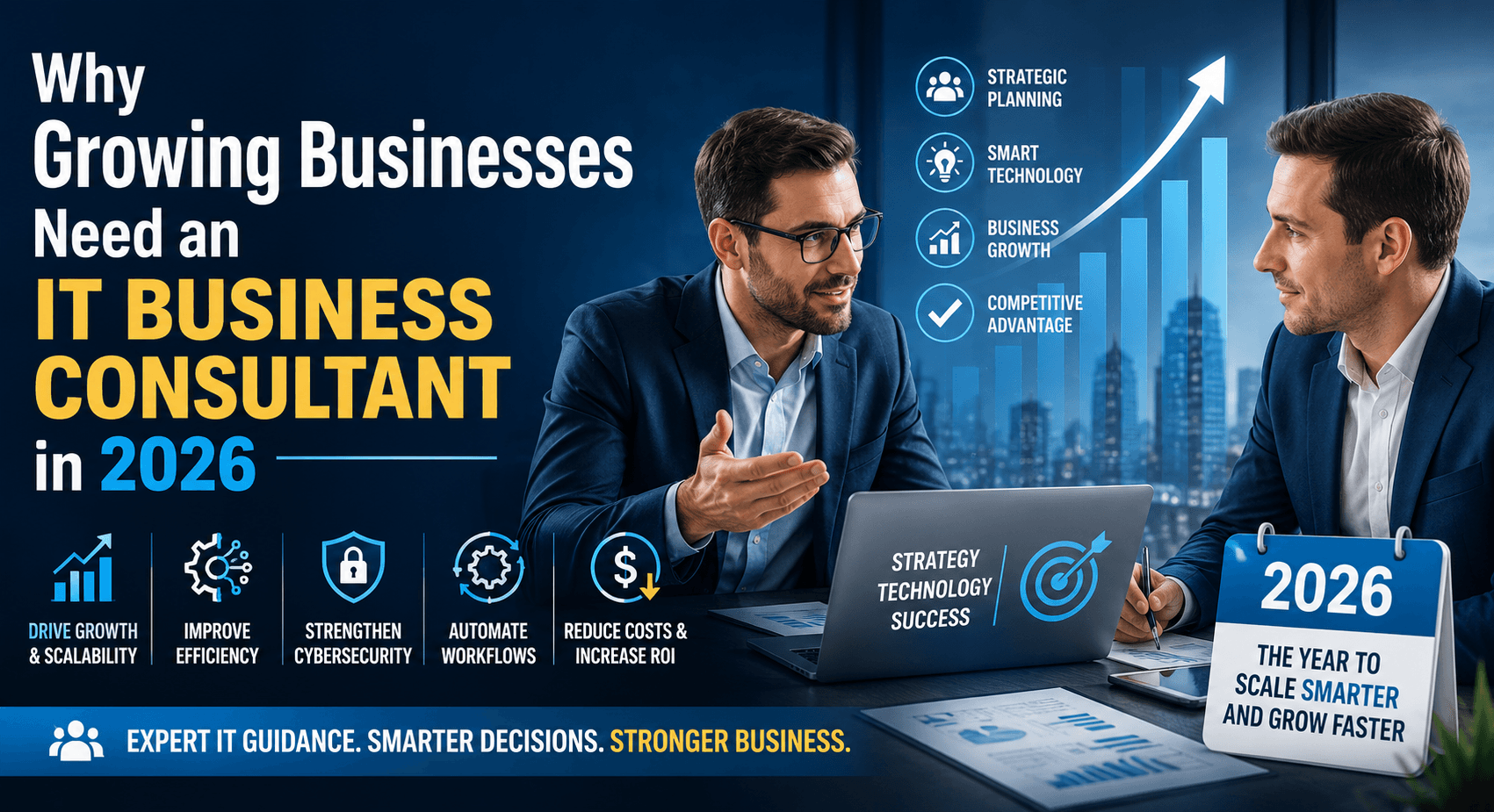
Whether you need a full IT audit, a technology roadmap, or a fractional CTO to lead your digital transformation — the right starting point is a clear-eyed assessment of where your business is today and what it needs to reach the next level.