How ChatGPT and Gemini Are Changing Search Engine Optimization
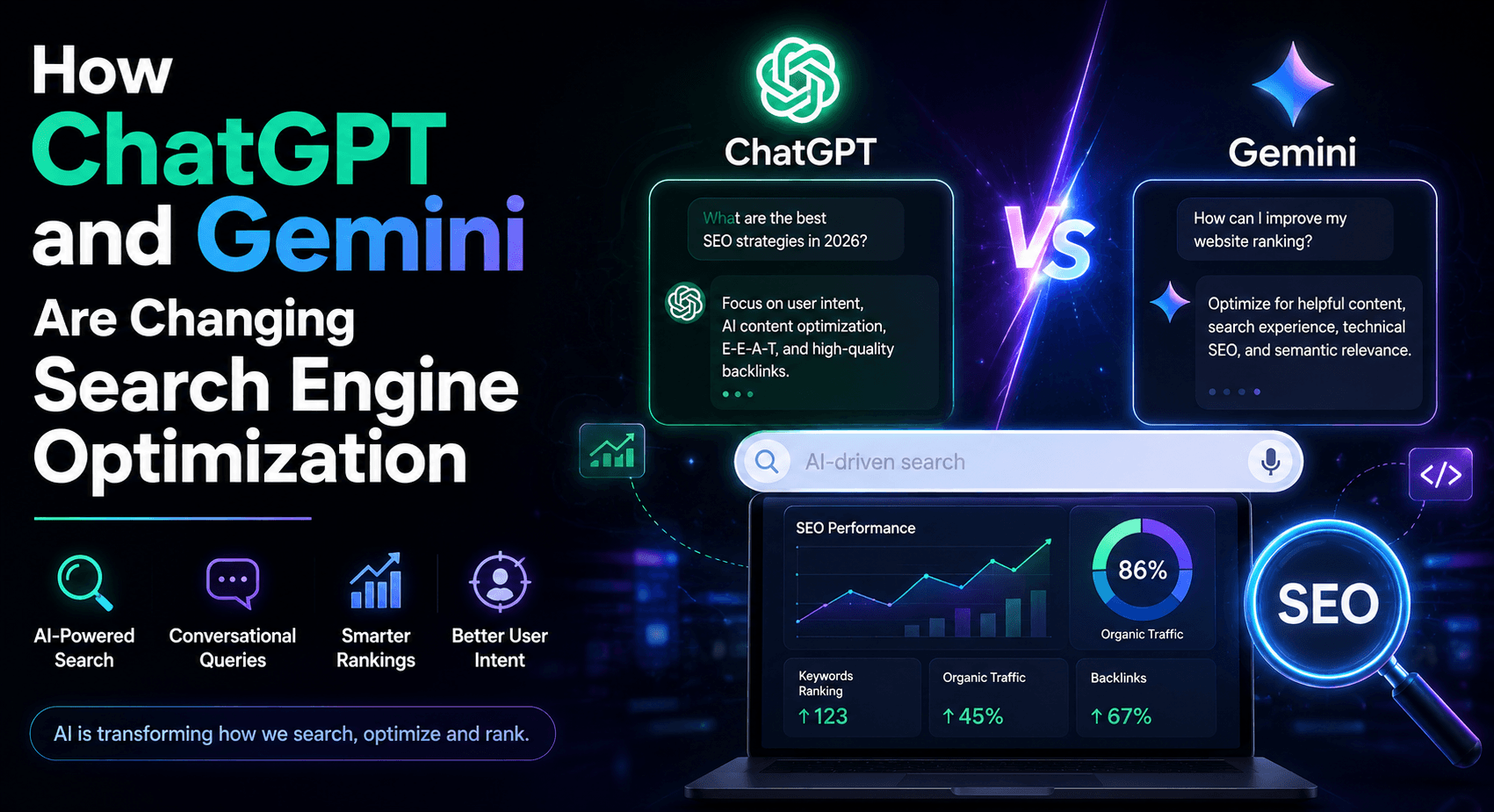
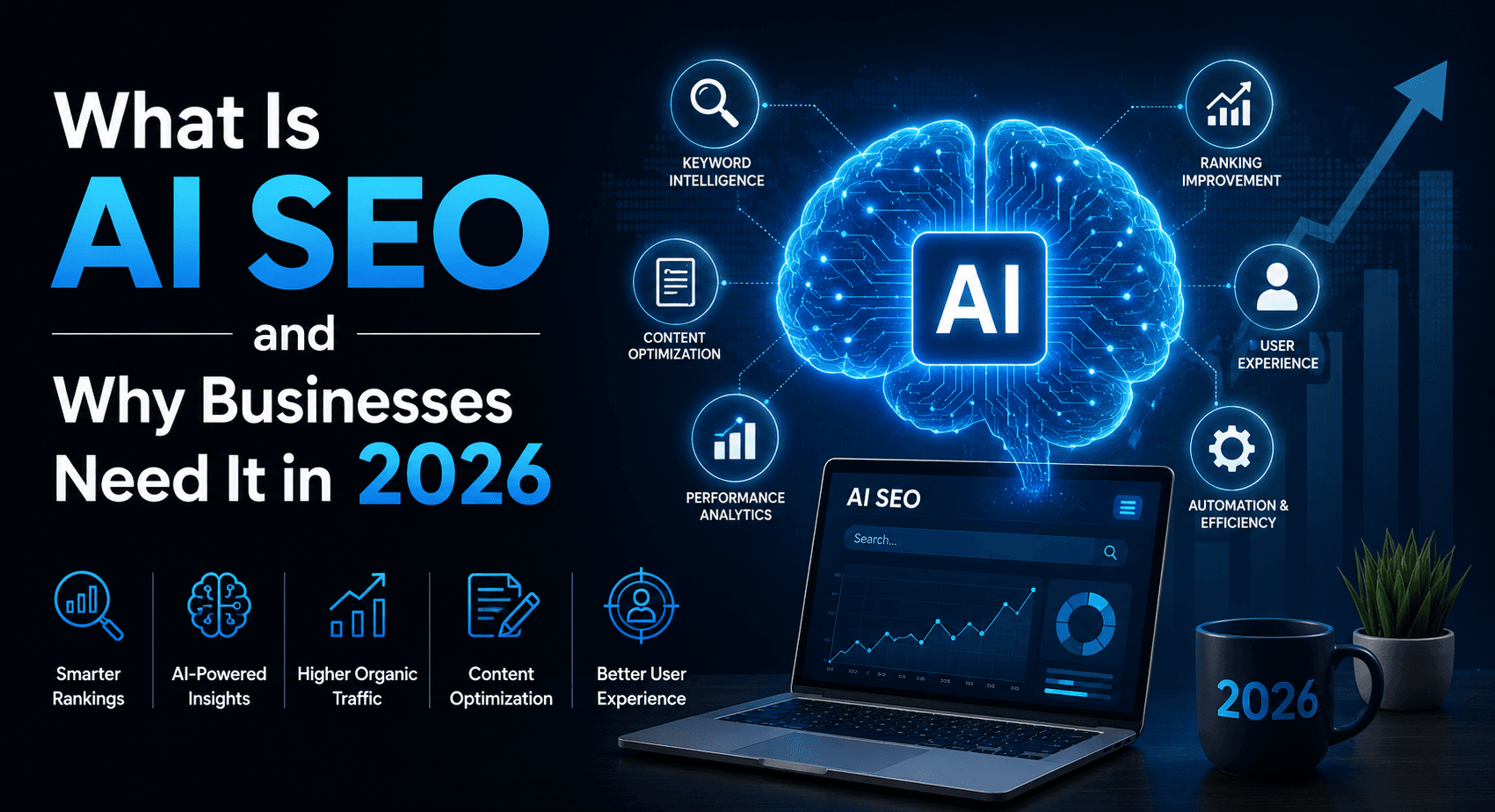
The search engines your customers are using in 2026 do not rank ten blue links anymore. They synthesise an answer — and they choose their sources based on signals your current SEO strategy was never designed to optimise for. That is the change. Everything else follows from it.
I want to start with something concrete. A client in Dhaka — an accounting firm — ranked in the top three positions for six high-value keywords. They had invested well in traditional SEO. The technical foundation was solid. The backlink profile was respectable. By early 2026, their organic traffic was down 28% year-on-year. When we dug into the data, the answer was clear: their target audience had shifted a significant share of their search behaviour to ChatGPT and Gemini, and those platforms were citing sources the firm had never heard of — smaller, less authoritative by traditional measures, but structured in a way that AI systems found more legible, more credible, and more citable.
That story is playing out across industries and across markets right now. And understanding why it is happening — not just that it is happening — is the prerequisite for responding to it effectively.
How ChatGPT and Gemini Actually Find and Choose Sources
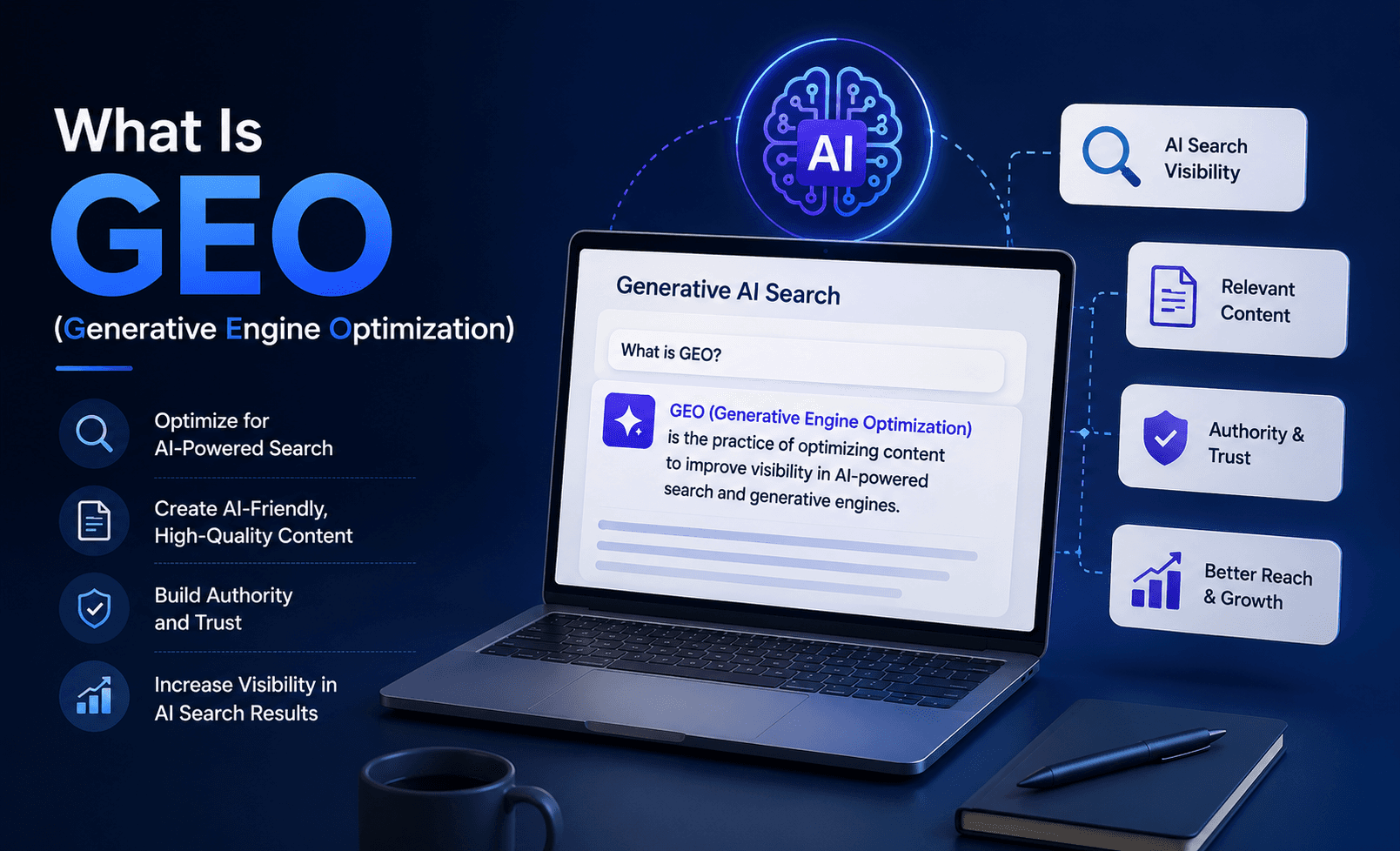
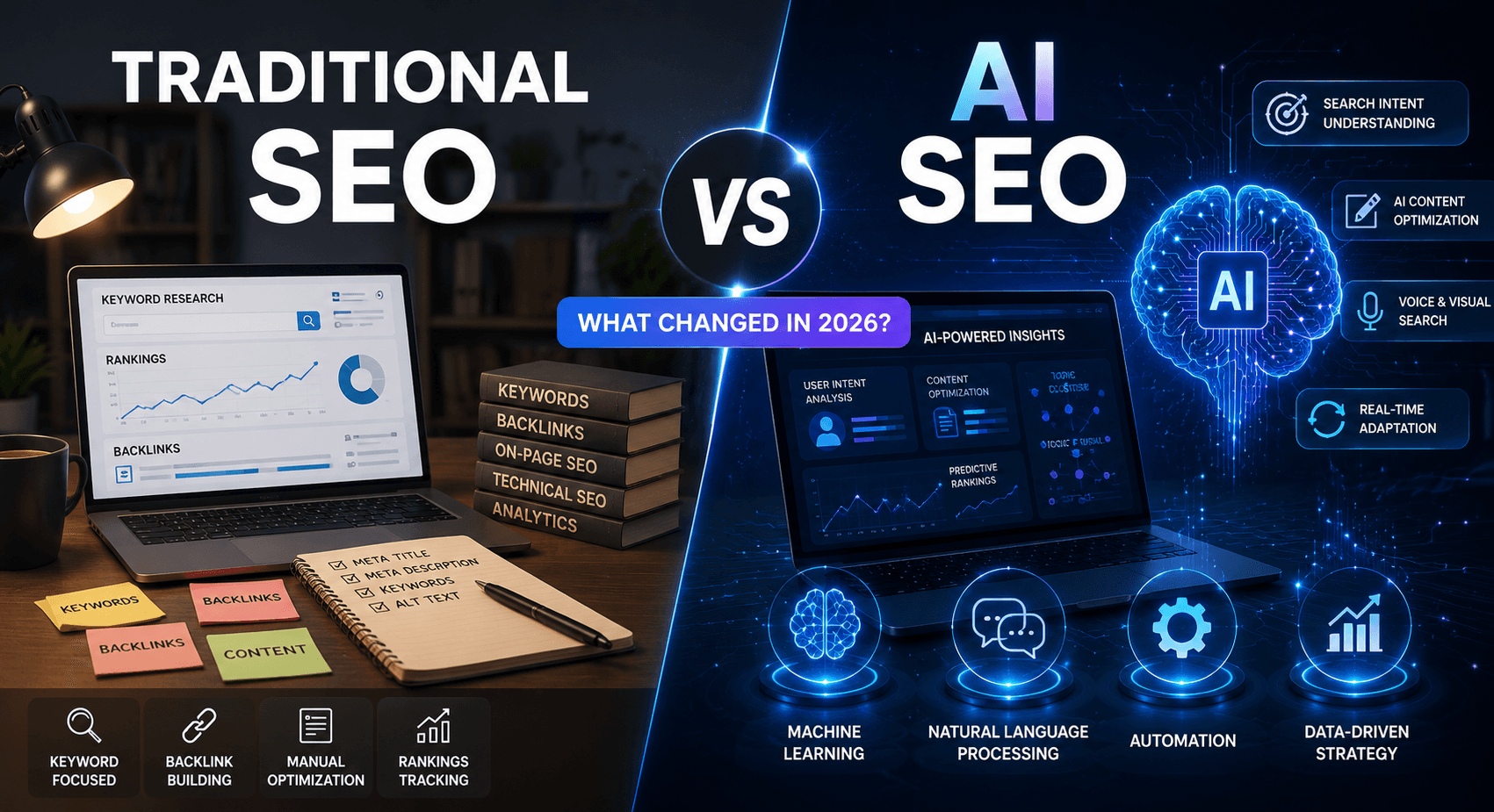
To optimise for these platforms, you first need to understand how they work — which is fundamentally different from how Google's traditional search crawler operates. Google sends bots to index pages, evaluates hundreds of signals, and returns ranked results. ChatGPT and Gemini are large language models that, in their search-enabled versions, access live web content but evaluate and select sources through very different logic.
These systems are looking for content that clearly and directly answers a specific question, from entities with a verifiable track record in the relevant domain, structured in a way the model can parse with high confidence. They weight originality — content that introduces a genuine perspective, proprietary data point, or named framework that other sources reference tends to get cited more than content that summarises what already exists. They weight clarity over comprehensiveness. And they weight entity consistency — a brand with accurate, coherent information across multiple authoritative sources is far easier for AI systems to trust and cite.
- Pulls live web results via Bing integration for real-time answers
- Prioritises structured, directly answerable content over discursive text
- Weights originality — sources cited by others get cited more
- Strong preference for named authors with visible domain credentials
- Citations shown to users — a direct trust signal for your brand
- Optimise with: Q&A structure, schema markup, named authorship
- Draws directly from Google's own search index and Knowledge Graph
- Traditional SEO signals still matter — but are no longer sufficient
- E-E-A-T is a primary filter for which sources get selected
- Entity recognition from Knowledge Graph carries significant weight
- FAQ and Article schema dramatically improve AI Overview citation rate
- Optimise with: topical authority, entity consistency, structured data
The Six Ways These Platforms Are Changing SEO Practice
The shifts ChatGPT and Gemini are driving are not marginal adjustments. They are changing the fundamental objectives of an SEO strategy — what you are optimising for, how you measure success, and what kind of content produces business results.
A keyword ranking tells you where you appear in a list. An AI citation tells you that a system trusted by millions of users has evaluated your expertise and chosen to stake its credibility on your answer. That is a fundamentally different kind of visibility — and it compounds in ways rankings never quite did.
What This Means Specifically for Bangladesh Businesses
The shift toward AI-native search is not a Silicon Valley story. It is happening in Dhaka, Chittagong, Sylhet, and every market where business decision-makers use ChatGPT to research vendors, compare services, or answer operational questions before they ever visit a website.
For professional services businesses — IT consultants, legal firms, accounting practices, management consultants — the implication is significant. Potential clients are increasingly asking ChatGPT or Gemini questions like "what ERP system should I implement for my manufacturing business?" or "how do I set up a CRM for my sales team?" The answers those tools provide cite specific sources. The businesses cited win consideration before the search for a vendor even begins. Those not cited are absent from a conversation already happening without them.
If ChatGPT or Gemini cannot find consistent, credible, well-structured information about your business and expertise online, you do not appear in AI-generated answers — regardless of your actual capabilities. In a market where AI-assisted research is rapidly becoming the first step in business decision-making, being invisible to these tools means being absent at the precise moment your potential customers are forming their initial shortlist.
Six Actions That Improve Your Visibility in ChatGPT and Gemini
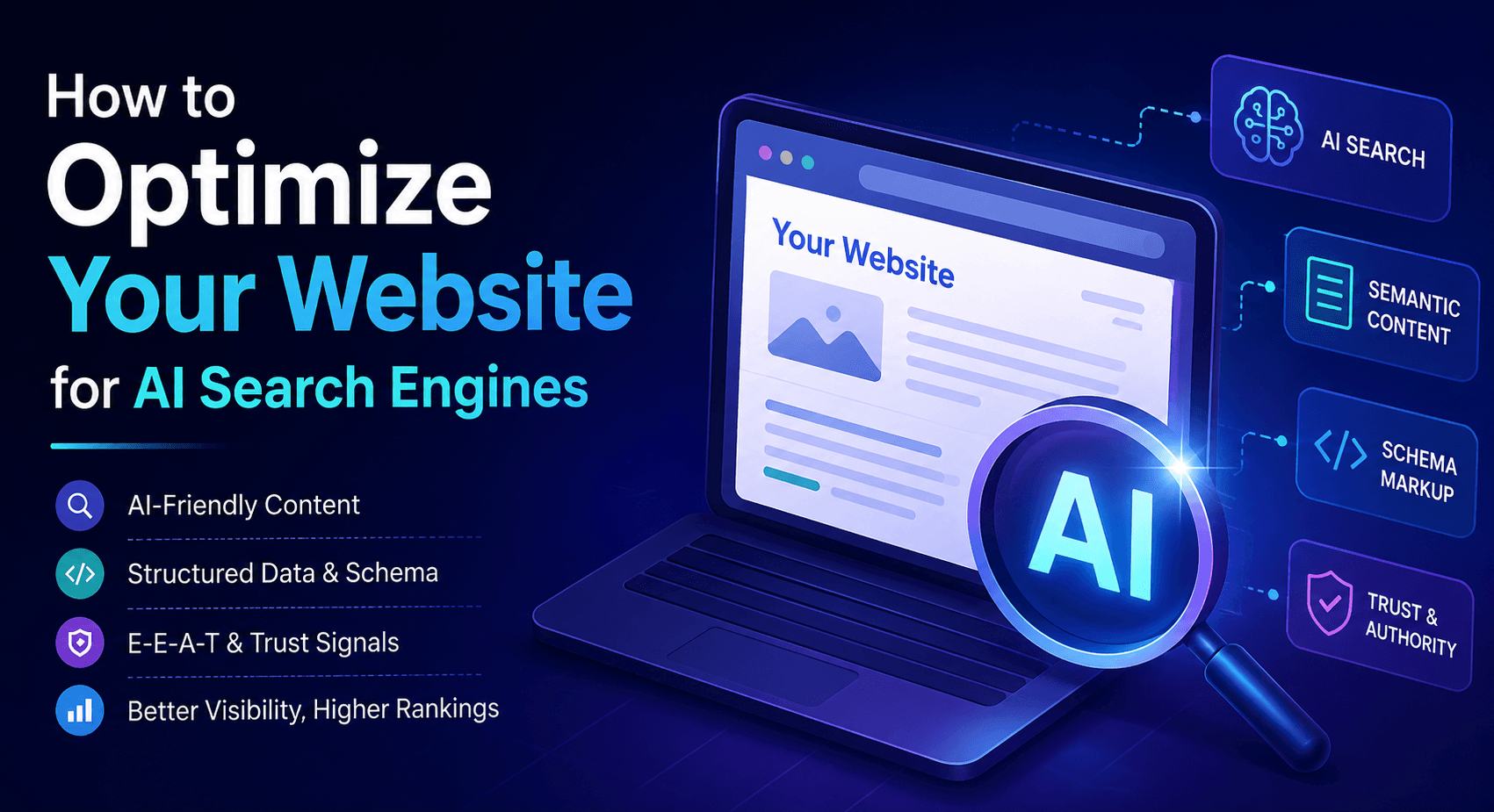
Optimising for AI-native search platforms builds on the same technical foundation as traditional SEO — but with a different strategic layer on top. Here are the six highest-impact actions for businesses looking to improve their visibility in ChatGPT and Gemini search results right now:
Rewrite key pages so each section begins with a question as the subheading, followed immediately by a clear, direct answer in the first one to two sentences. Supporting context and depth follow. This is how AI systems prefer to extract and cite information — and it serves human readers equally well.
Add named author attribution to all content, with bio sections stating specific qualifications, years of experience, and notable work. Link these profiles consistently from every piece of content. This is one of the single highest-impact changes most businesses can make immediately — and requires no technical knowledge to implement.
Choose the domain where your business has the deepest genuine expertise. Build a comprehensive content cluster around it — a pillar page covering the core topic, supported by articles addressing every related question and subtopic. This signals authoritative domain ownership to both Google and AI-native search tools.
Schema markup is machine-readable metadata that tells AI systems exactly what your content contains, who produced it, and what organisation it represents. Pages with comprehensive schema are measurably more likely to be cited in AI-generated answers. If your site has no schema implementation, this should be a near-term priority.
Ensure your business appears with accurate, consistent information on Google Business Profile, relevant industry directories, and professional listings. Pursue mentions in local business publications and industry media. Each authoritative mention reinforces your brand entity in the knowledge graphs AI systems use to evaluate credibility.
Content that introduces something genuinely new — proprietary research, a named methodology, a documented case study with specific data — gets cited by other content creators. Being cited by others is the most powerful AI citation signal you can build. It tells AI systems that your content is a primary source, not a secondary one.
Tracking keyword rankings remains relevant but is no longer sufficient. Forward-looking SEO measurement in 2026 also monitors: AI Overview appearance rate in Google Search Console, branded search volume growth as a proxy for AI-driven awareness, engagement quality of traffic from cited sources versus standard organic, and direct monitoring of how your brand appears in ChatGPT and Gemini responses for your core topic queries. Run these checks monthly and track how citation frequency evolves over time.
The businesses that will look back at 2026 as a defining year for their organic growth are the ones making strategic decisions now — not waiting for AI search adoption to become undeniable before responding. Early movers in AI-native search visibility are building compounding authority advantages that will be increasingly difficult for late movers to close.
ChatGPT and Gemini are not replacing search. They are becoming the first layer of it — the layer where initial trust is established, initial shortlists are formed, and initial recommendations are made. The businesses present in that layer are winning consideration before their competitors even know the conversation started.
From GEO strategy and content restructuring to schema implementation, author E-E-A-T setup, and brand entity optimisation — we help businesses build the AI search visibility that compounds into long-term organic authority.