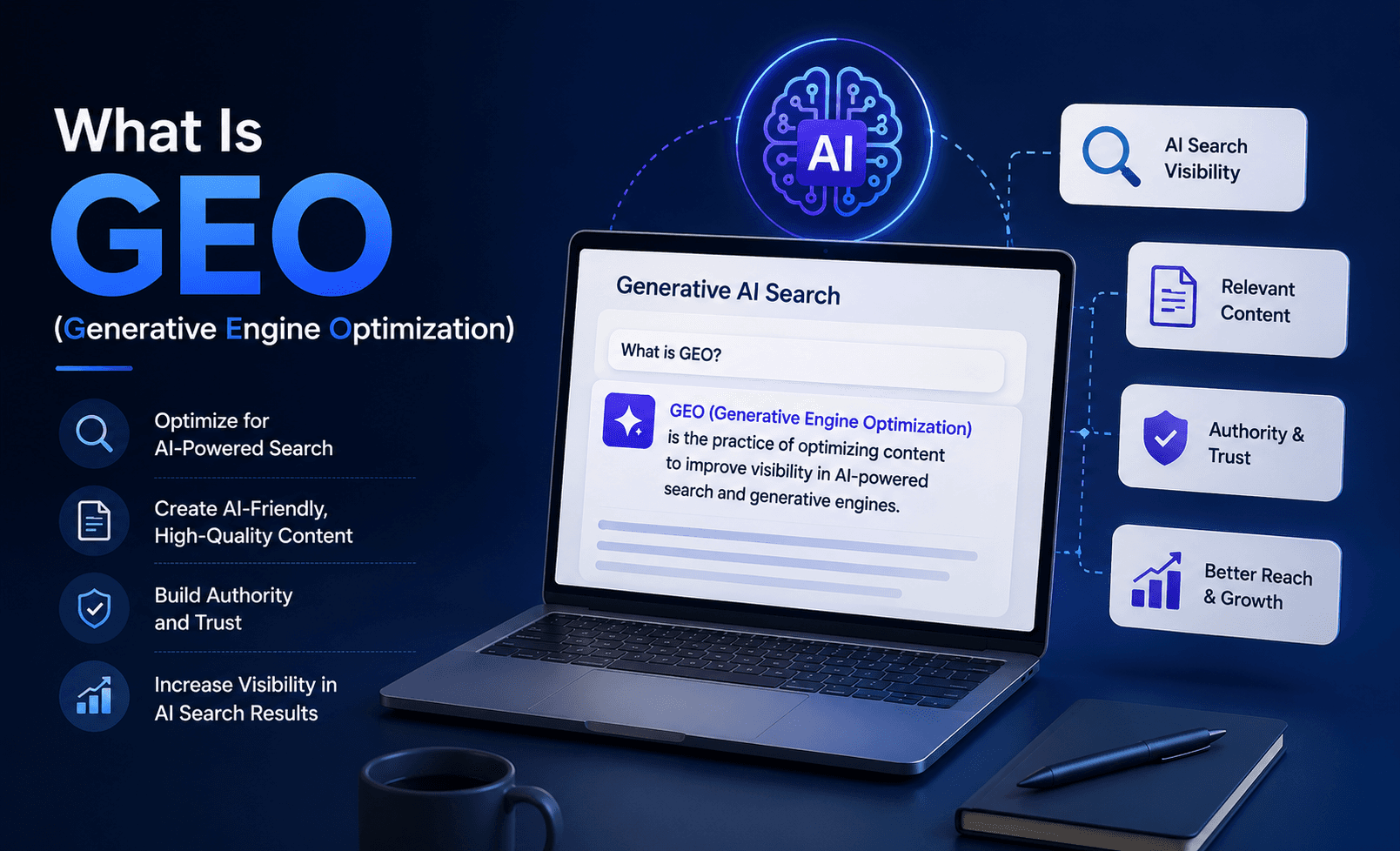
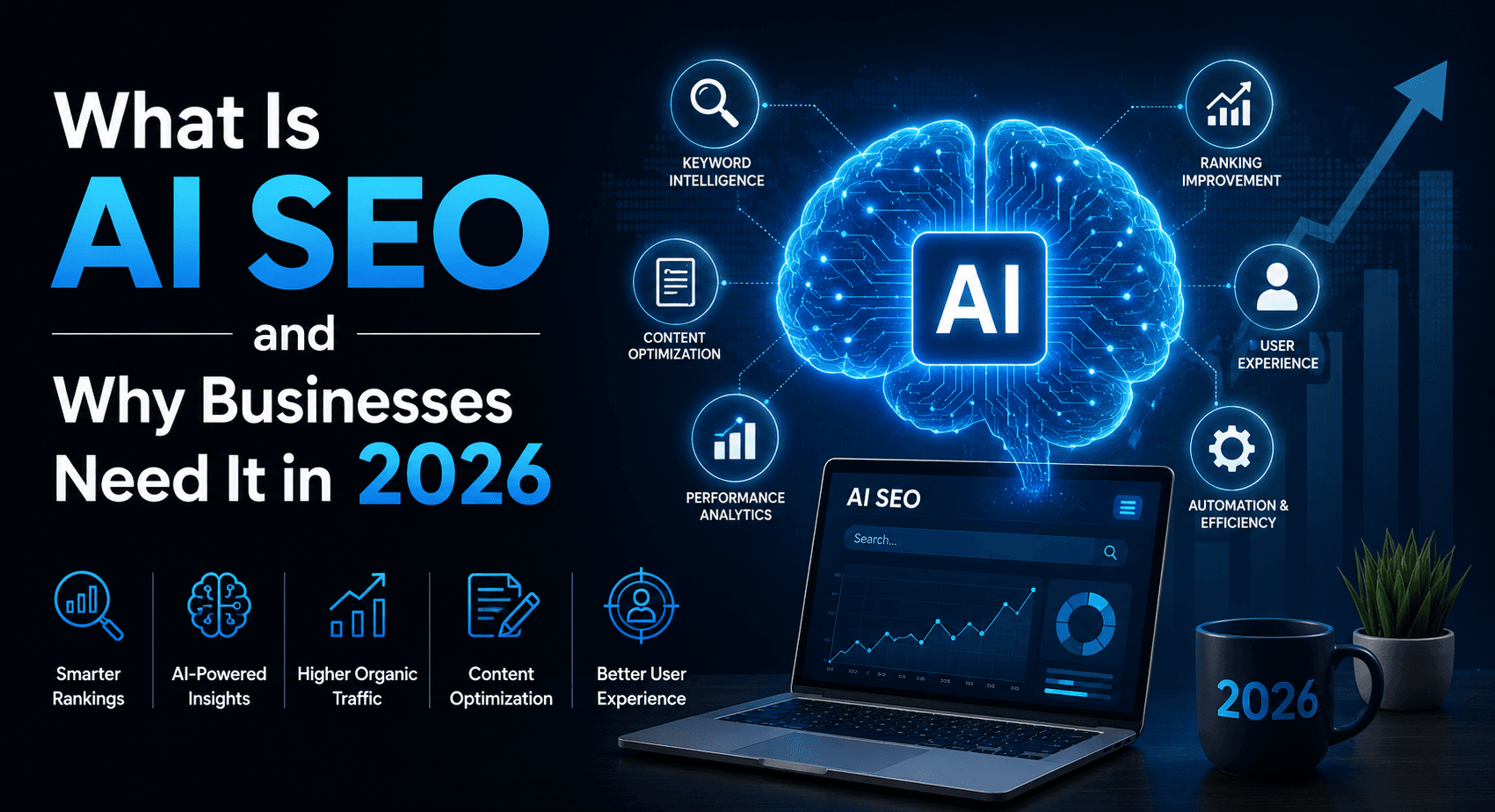
How to Optimize Your Website for AI Search Engines
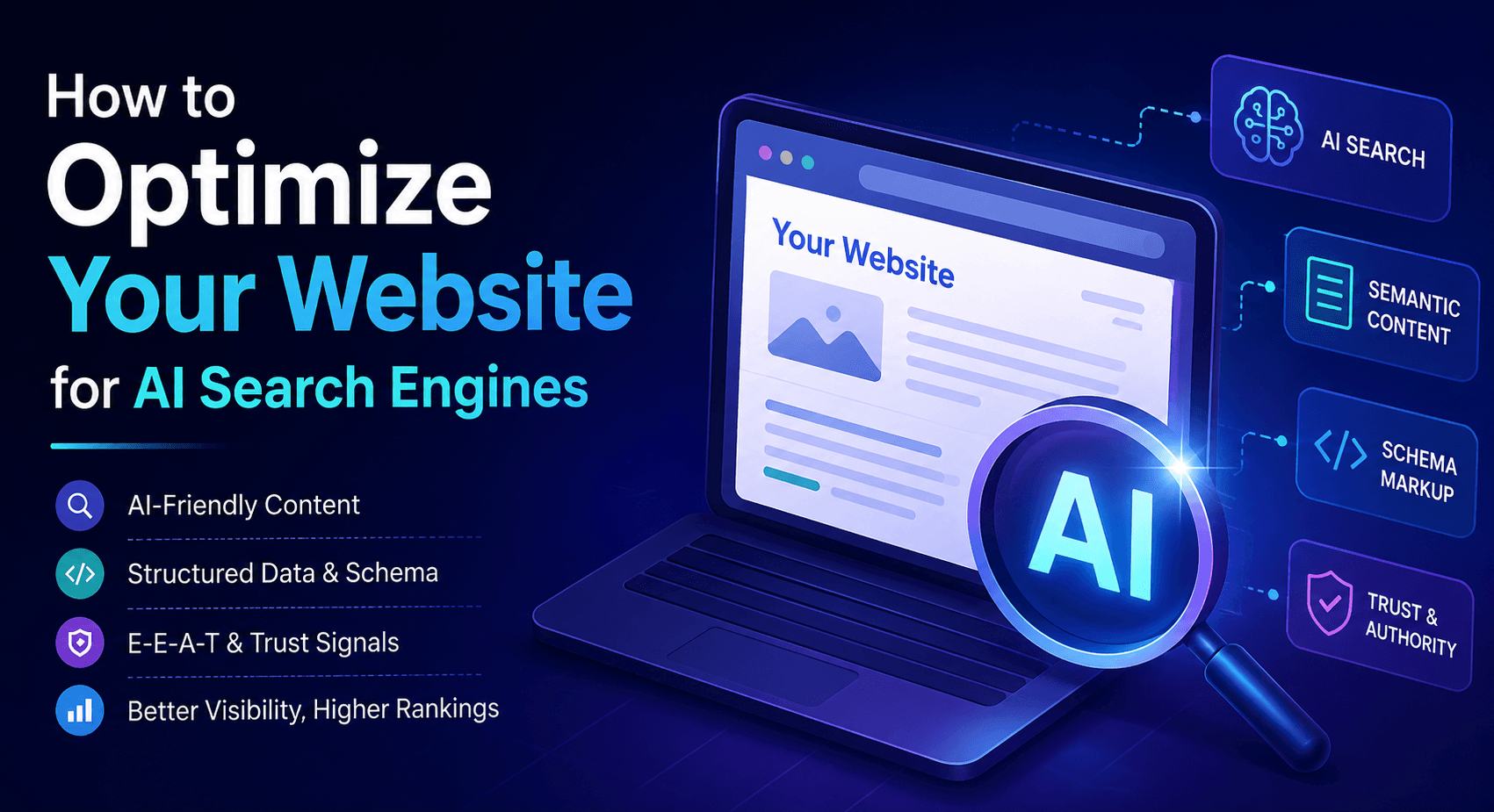
Search has changed more in the past eighteen months than in the previous decade. The way people find businesses, evaluate expertise, and form buying decisions is being quietly rewired — and most websites were built for a world that no longer exists.
If your website was last audited for SEO two or three years ago, the optimisation framework you used was designed for a fundamentally different search environment. Google's ten blue links are no longer the primary destination for intent-driven queries. ChatGPT, Gemini, Perplexity, and Google's own AI Overviews now intercept a growing share of exactly the searches your business depends on — and they select their sources by logic that traditional keyword optimisation was never built to address.
This is not a crisis for businesses that understand what is happening. It is an opportunity — because most of your competitors have not yet adjusted their strategy. The businesses that build AI search visibility now will enjoy a compounding authority advantage that will become increasingly difficult to close. This guide explains exactly what that means, and precisely what you need to do.
01 — Understanding How AI Search Engines Actually Work
Before you can optimise for AI search engines, you need to understand what makes them different from traditional search. This is not a minor distinction. It changes the entire objective of what you are trying to achieve on your website.
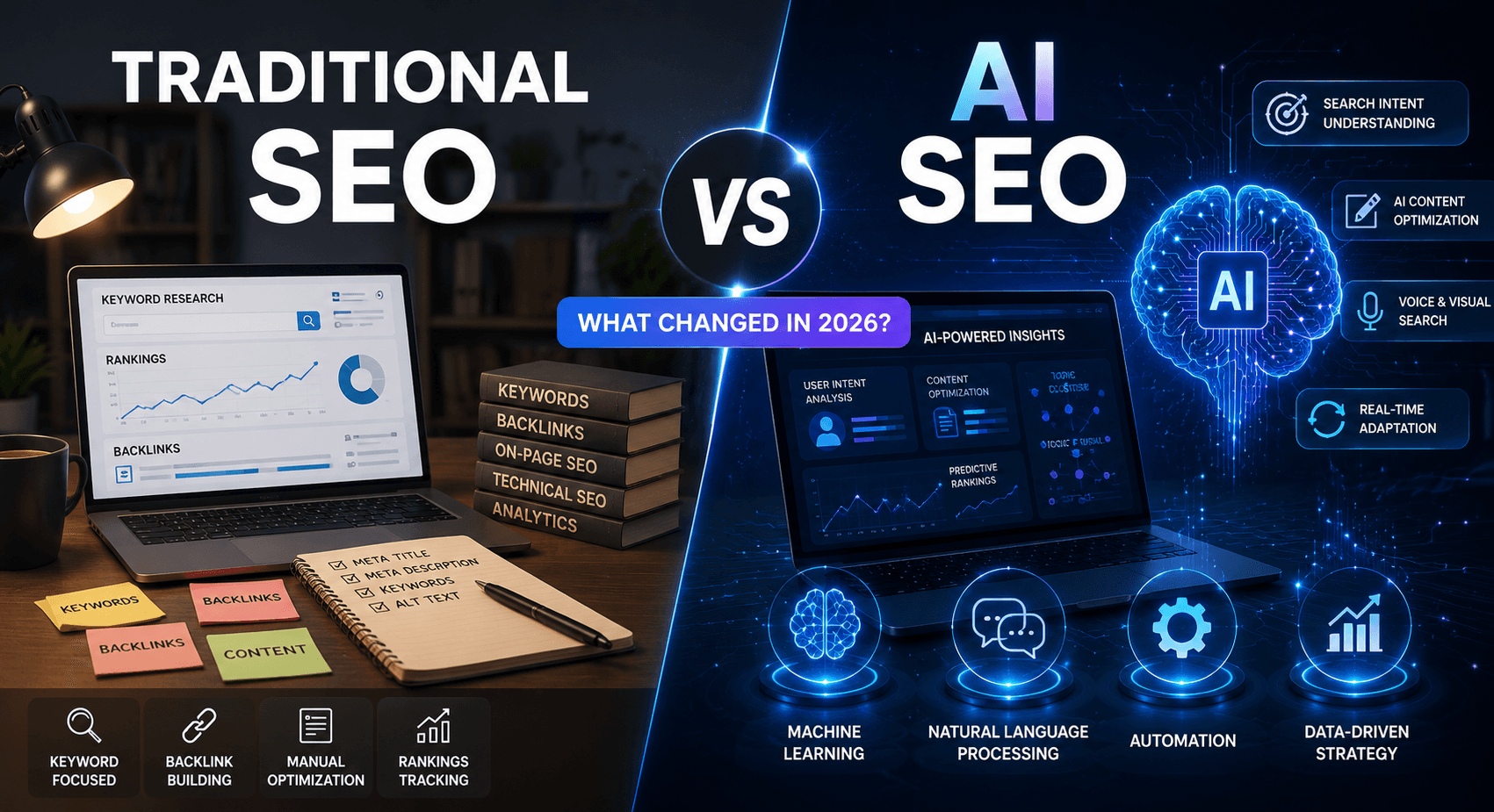
Traditional search engines like Google crawl your pages, index content, and rank results based on hundreds of signals — backlinks, page speed, keyword usage, domain authority, and many more. AI search engines do something fundamentally different: they synthesise answers. They do not return a list of pages and leave the evaluation to the user. They read multiple sources, form a response, and — critically — decide which sources to cite and which to ignore.
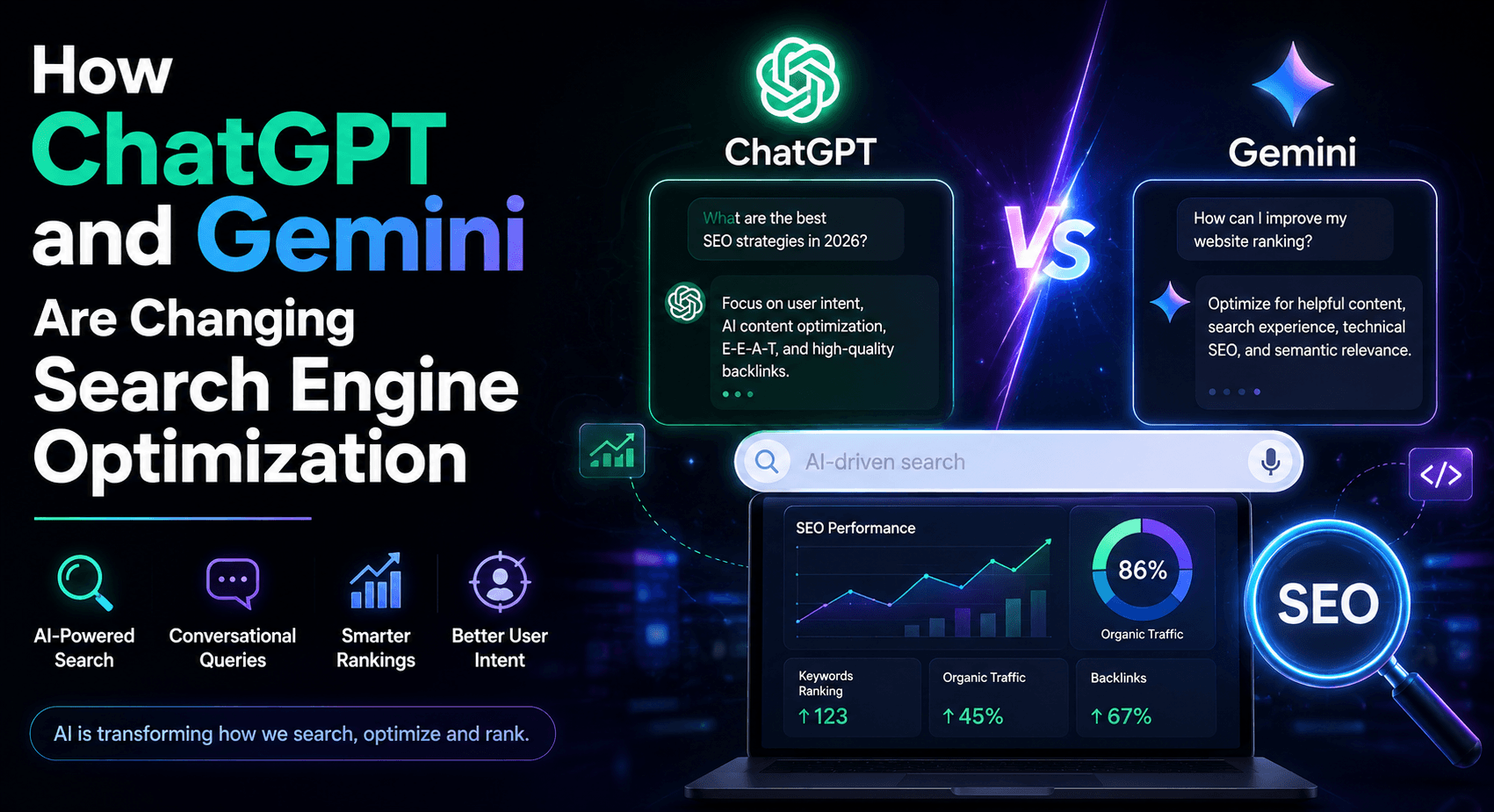
ChatGPT's search mode pulls live web content via Bing integration and evaluates it for relevance, clarity, and credibility. Google's Gemini draws from its own index and Knowledge Graph, weighting E-E-A-T signals heavily. Perplexity evaluates source authority and freshness. All of these systems share one core behaviour: they prefer content that clearly, directly, and credibly answers a specific question — and they cite sources that make their answer look authoritative, not just sources that rank well.
- Measured by keyword ranking position
- Optimised for crawler indexing signals
- Success = user clicks your link in the list
- Backlink volume as primary authority signal
- Comprehensiveness rewarded regardless of clarity
- Measured by citation frequency in AI responses
- Optimised for language model parsing and trust
- Success = AI recommends your brand in its answer
- Entity authority and consistency as trust signal
- Directness and answer-quality rewarded above all
02 — Restructure Your Content Around Questions, Not Keywords
The single highest-impact change most websites can make right now is restructuring key pages around specific questions rather than keyword phrases. This shift sounds minor. The results are not.
AI search systems are, at their core, question-answering machines. When a user asks ChatGPT "what ERP system should I use for a mid-sized manufacturing business," it scans its available sources for content that most directly and authoritatively answers that precise question. A page titled "ERP Implementation Services" with three paragraphs of marketing copy will lose to a page structured as: "What ERP System is Right for a Mid-Sized Manufacturing Business? Here's How to Decide." — followed immediately by a direct, substantive answer.
The structural rule is simple: every major section of a key page should begin with a question as the heading, followed by the direct answer in the first one to two sentences. Supporting depth, context, and detail follow. This pattern makes your content trivially easy for AI systems to extract and cite — and it serves human readers equally well, because people also scan for answers before they read.
AI systems prefer content that surfaces the answer before the context — not content that buries it. Rewrite your service pages and blog posts so that every section heading is a question your target customer would type into ChatGPT, and the first sentence after each heading is a clear, direct answer. This alone can increase your AI Overview citation rate within 60–90 days of implementation.
03 — Build Topical Authority in a Single, Defined Domain
AI search systems do not evaluate pages in isolation. They evaluate publishers — the overall body of content an entity has produced on a given topic. A website that has published thirty genuinely useful, well-structured articles on cloud infrastructure for SMEs will be selected as a source for cloud infrastructure queries far more reliably than a website that has published one article on the topic surrounded by unrelated content.
This concept — topical authority — has been relevant to traditional SEO for years, but AI-native search has elevated it to a primary selection criterion. The question an AI system is implicitly asking when it decides whether to cite you is: "Is this entity a genuine authority on this topic, or are they just publishing one piece of content that happens to rank?"
The practical implication is that you should choose one subject area where your business has the deepest genuine expertise and build comprehensive coverage of that domain. Create a pillar page that addresses the core topic at depth. Support it with cluster articles addressing every meaningful sub-question and subtopic. Link these pieces together coherently. Over time, this structure signals clear topical ownership to both Google and AI-native search platforms — and it is the foundation that everything else in this guide builds upon.
04 — Make Author Expertise Visible and Verifiable
Anonymous content is increasingly disadvantaged in AI search citation. This is not a philosophical preference — it is a practical constraint that emerges from how these systems evaluate credibility. An AI model choosing between two sources with comparable content quality will favour the one where the author's expertise is visible, specific, and verifiable.
Google's E-E-A-T framework — Experience, Expertise, Authoritativeness, and Trustworthiness — is now a primary filter for which sources get selected in AI Overviews. ChatGPT's search mode similarly weights named, credentialled authorship. This means that an author bio section is no longer a formatting courtesy — it is a substantive ranking signal.
Every blog post, guide, and service page should display a named author with a linked bio. The bio should state specific qualifications, years of industry experience, and any notable credentials or achievements relevant to the topic. Generic "Team QoraxAI" attributions carry no weight with AI systems.
Each author should have a dedicated profile page on your domain that aggregates all their published content, outlines their background in detail, and links to any external credentials or publications. This page becomes the entity reference that AI systems use to verify author authority.
LinkedIn profiles, industry association listings, guest publications, and professional directories all reinforce author entity authority. When an AI system cross-references an author name across multiple authoritative sources and finds consistent, credible information, trust in the content they produce increases substantially.
Use Person schema to mark up author information in machine-readable format. Include name, job title, employer, and links to their social or professional profiles. This ensures AI systems and search crawlers can reliably identify and validate author credentials without relying solely on on-page text parsing.
05 — Implement Technical Schema Markup Strategically
Schema markup is structured, machine-readable metadata that tells AI systems and search crawlers exactly what your content is, who produced it, what organisation it represents, and what questions it answers. Pages without schema rely on AI systems to infer all of this from unstructured text — an inference that introduces uncertainty and can result in your content being overlooked in favour of a competitor whose page makes the same information explicit.
For AI search optimisation specifically, the highest-priority schema types to implement are Article (establishing content type and authorship), FAQ (creating direct question-and-answer pairs that AI systems can extract verbatim), Organisation (connecting your content to a verified business entity), and BreadcrumbList (establishing topical context and site architecture).
Pages with comprehensive, accurate schema markup are measurably more likely to be cited in AI-generated answers and featured in Google's AI Overviews. This is one of the highest-return technical implementations a website can make, and it requires no content changes — only additions to your page metadata.
The businesses that will dominate AI search in 2027 are not the ones spending more on advertising. They are the ones that made their websites legible to machines — structured, authored, and entity-verified — while their competitors were still debating whether AI search was real.// QoraxAI · AI Search Strategy Practice · 2026
06 — Build Your Brand Entity Across the Web
In traditional SEO, authority is largely a function of backlink volume and quality. In AI-native search, authority is better described as entity coherence — the degree to which a brand appears consistently, accurately, and positively across the authoritative sources that AI systems use to build their understanding of the world.
Think of it this way: when a user asks ChatGPT about IT consultants in Dhaka, the model does not simply rank pages. It draws on everything it knows about relevant entities — their presence on Google Business Profile, their mentions in industry publications, their Wikipedia entry if one exists, their reviews on authoritative directories, their citations in other content. A business with a fragmented, inconsistent, or thin online presence is poorly understood by the model and therefore unlikely to be recommended.
Entity building in practice means ensuring your business appears with accurate, consistent NAP (Name, Address, Phone) information on Google Business Profile and all major directories; pursuing mentions and citations in local business media and industry publications; and creating genuinely citable content that other publishers reference and link to. Each authoritative mention reinforces your entity in the knowledge graphs AI systems use to evaluate credibility and relevance.
- Question-structured headings on all key pages
- Direct answers in first 1–2 sentences of each section
- Named author attribution on every content page
- Detailed author bio pages with credentials
- Article and FAQ schema on all blog and guide content
- Organisation schema on homepage and about page
- Google Business Profile verified and fully completed
- Consistent NAP data across all business directories
- Topical content cluster built around one core subject
- Internal linking between all pillar and cluster pages
- Original proprietary data or named methodology published
- Monthly monitoring of AI citation frequency per topic
07 — Create Original Content That Others Will Cite
The most powerful AI search signal you can build — and the hardest to replicate — is being cited by other content creators. When other publishers reference your research, quote your methodology, or link to your data, you transition from secondary source to primary source in the eyes of AI systems. That distinction compounds: the more you are cited, the more you get cited.
Practically, this means publishing content that introduces something genuinely new into your topic area. A proprietary survey of your industry. A named framework with a distinctive label that others will naturally reference. A documented case study with specific data points that do not appear anywhere else. A detailed technical guide that saves other writers the work of producing it themselves. These are the content types that attract inbound citations — and inbound citations are the fuel that drives AI citation authority.
This does not require a large content team or significant budget. A single well-researched, genuinely original piece published quarterly will produce more AI citation value than fifty derivative blog posts that rephrase what already exists. The standard to hold your content to is simple: does this add something to the conversation that was not there before you wrote it?
08 — Measure What Actually Matters in AI-Era SEO
Tracking keyword rankings remains relevant — but it no longer tells the complete story. A business can rank number one for its target keyword and still lose consideration to a competitor being cited by AI tools for every related query. Forward-looking SEO measurement in 2026 requires an expanded measurement framework.
The directional test is the simplest place to start. Type your most important business query into ChatGPT and Gemini. Ask "who are the leading IT consultants in Dhaka" or "what digital marketing agencies should I consider in Bangladesh." If your business does not appear — or appears with inaccurate information — that is your baseline. The optimisations in this guide, implemented systematically over three to six months, change that baseline.
AI search visibility is not a binary state that you either have or lack. It is a cumulative asset built through consistent action across content structure, technical implementation, author authority, entity coherence, and original intellectual contribution. Every piece of that puzzle compounds on the others. Businesses that understand this and begin building now will look back on 2026 as the year their organic authority became genuinely defensible.
From technical schema implementation and content restructuring to author E-E-A-T setup, entity building, and monthly citation tracking — we help businesses across Bangladesh build the AI search presence that earns them consideration before their competitors even know the conversation started.