What Is GEO (Generative Engine Optimization)
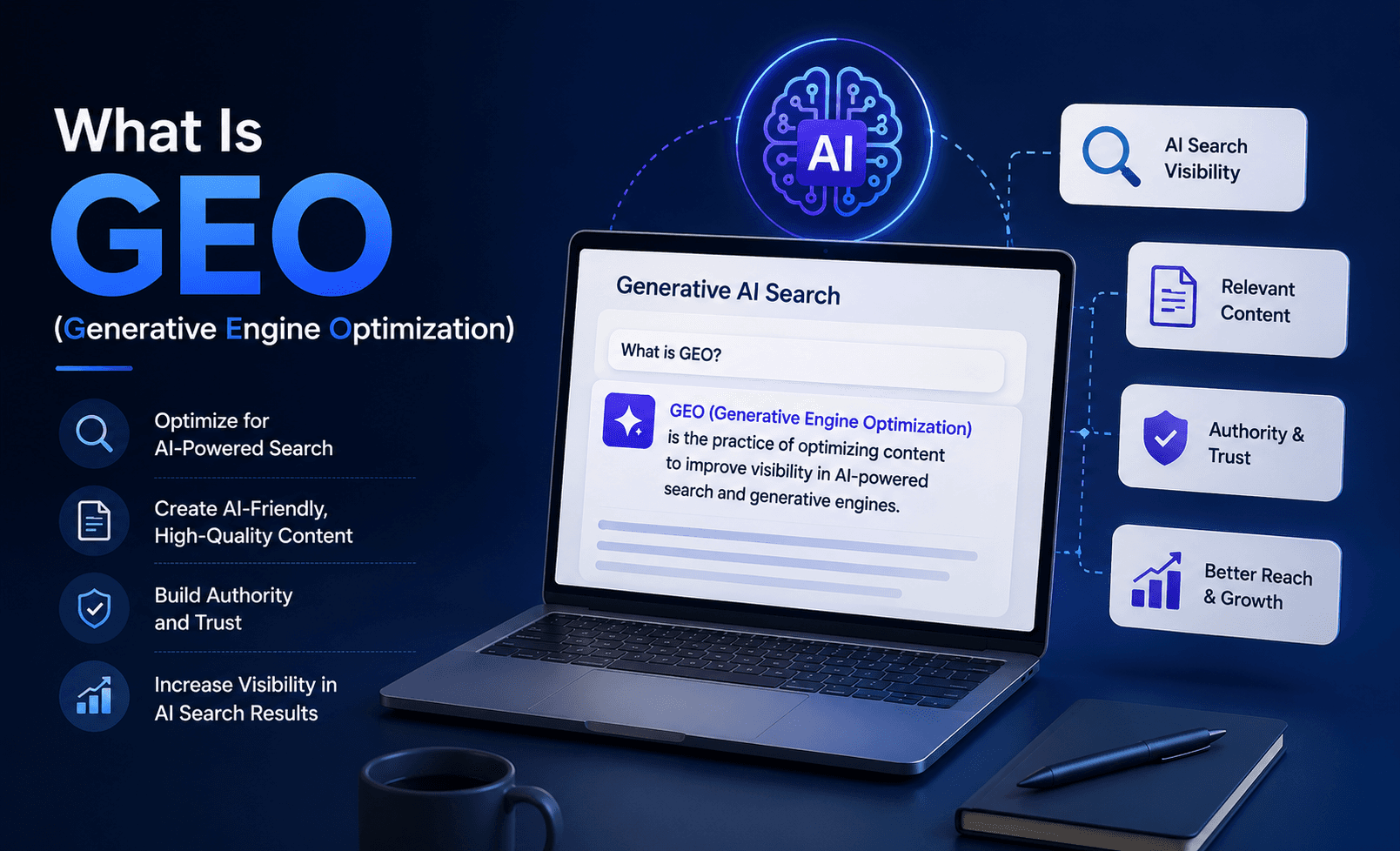
The rules of online visibility are being rewritten. Search engines no longer just list blue links — they answer questions directly. And that changes everything about how brands need to think about their digital presence.
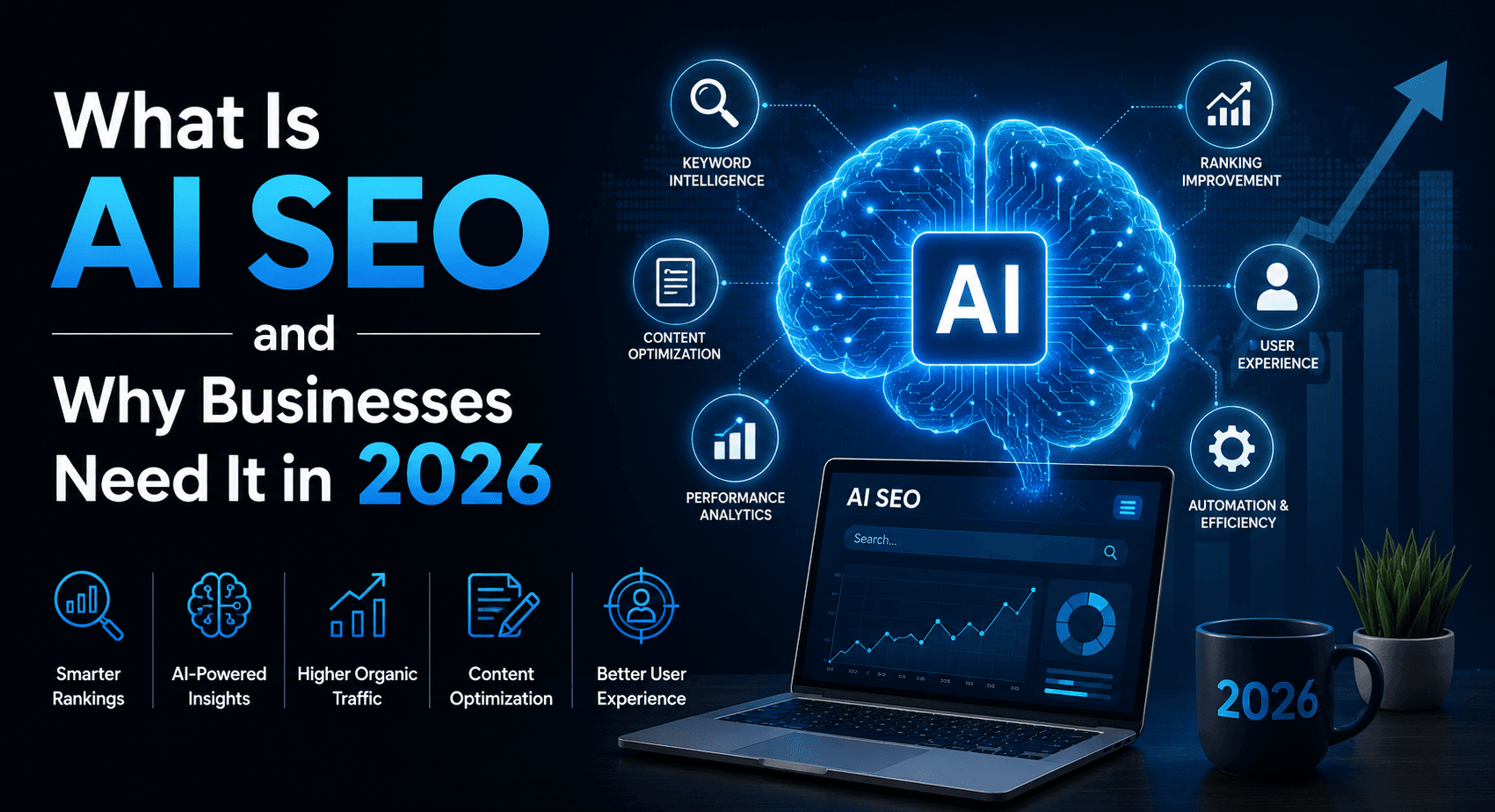
For the past two decades, Search Engine Optimization (SEO) has been the backbone of digital marketing. Businesses poured resources into keywords, backlinks, and technical audits to climb the ranks of Google's search results pages. It worked — for a long time. But the landscape of how people find information online has fundamentally shifted, and a new discipline has emerged to meet it: Generative Engine Optimization, or GEO.
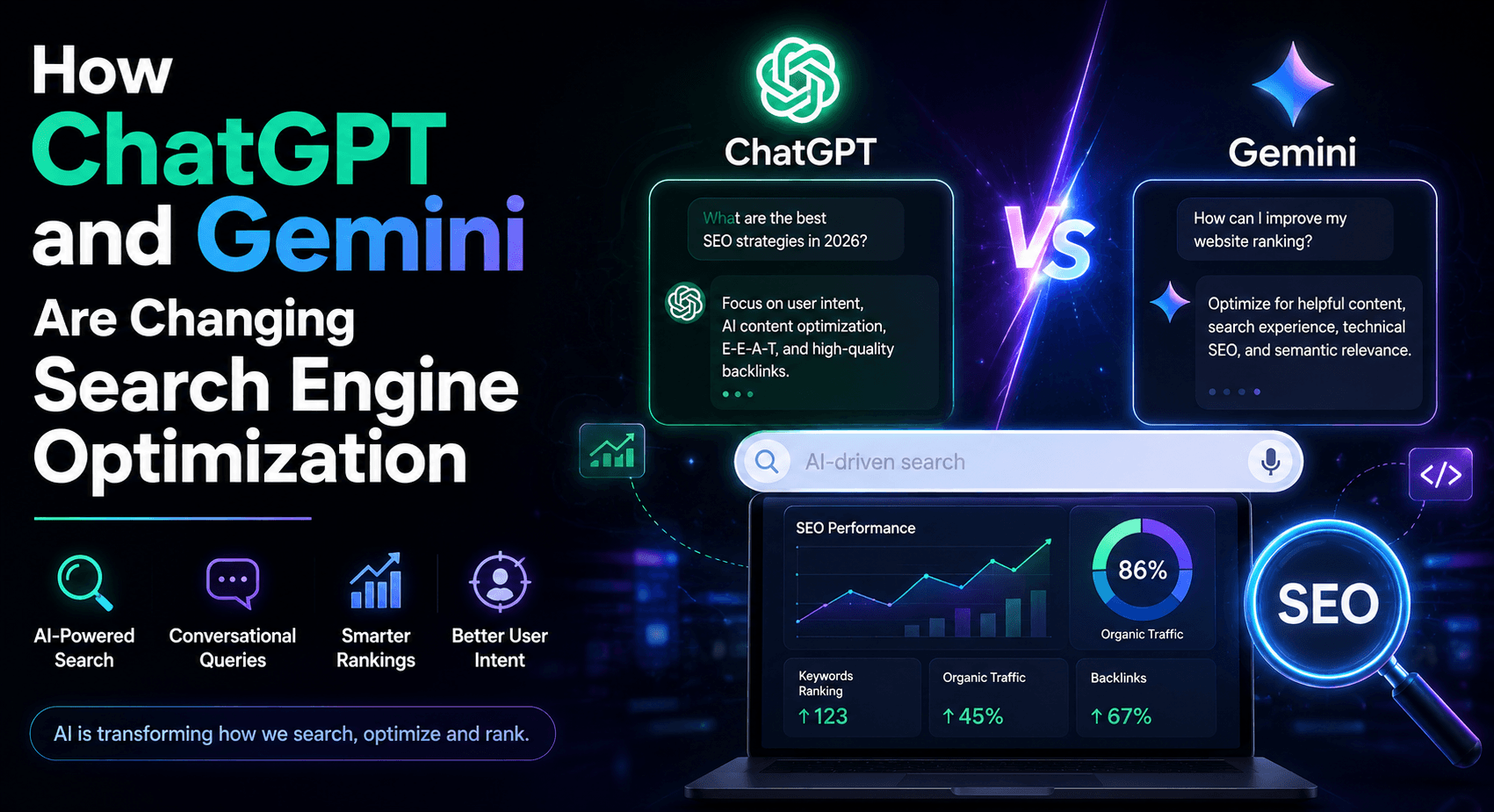
If you have recently asked a question on Google and received a detailed paragraph answer before even seeing any links, you have already experienced what GEO is designed to target. These AI-generated summaries — known as AI Overviews on Google, or as direct answers in tools like ChatGPT, Perplexity, and Microsoft Copilot — are now the first thing millions of people read when they search for something. GEO is the practice of making sure your brand, your content, and your expertise are what those AI systems pull from.
Where Did GEO Come From?
GEO did not appear overnight. It grew from a quiet but profound change in how search technology works. Traditional search engines match keywords in a query against keywords in a document. They rank pages by relevance and authority and show you a list of results. You click, you read, you decide.
Generative AI search works differently. When you type a question into a modern AI-powered search tool, it does not simply scan its index. It synthesizes information from many sources, understands the intent behind your question, and constructs a clear, readable response. It reads the web so you do not have to — or at least, that is the promise it makes to users.
The academic roots of GEO can be traced to a Princeton University study published in 2023, which formally introduced the term and demonstrated that content properties like citations, statistics, quotability, and authoritative structure significantly influenced how often AI systems referenced a source in their generated answers. Since then, the practice has expanded rapidly, with marketers, content strategists, and SEO professionals all beginning to adapt.
GEO is not the death of SEO. It is the next chapter. The brands that will dominate the next decade are those that learn how to be cited, not just ranked.
— Digital Strategy InsightHow Generative Engines Decide What to Surface
Understanding GEO starts with understanding how large language models and AI search systems evaluate content. Unlike traditional algorithms that count links and keyword density, generative engines assess content more the way a thoughtful human editor would — they look for clarity, credibility, depth, and usefulness.
Several factors play a decisive role in whether your content gets pulled into an AI-generated response:
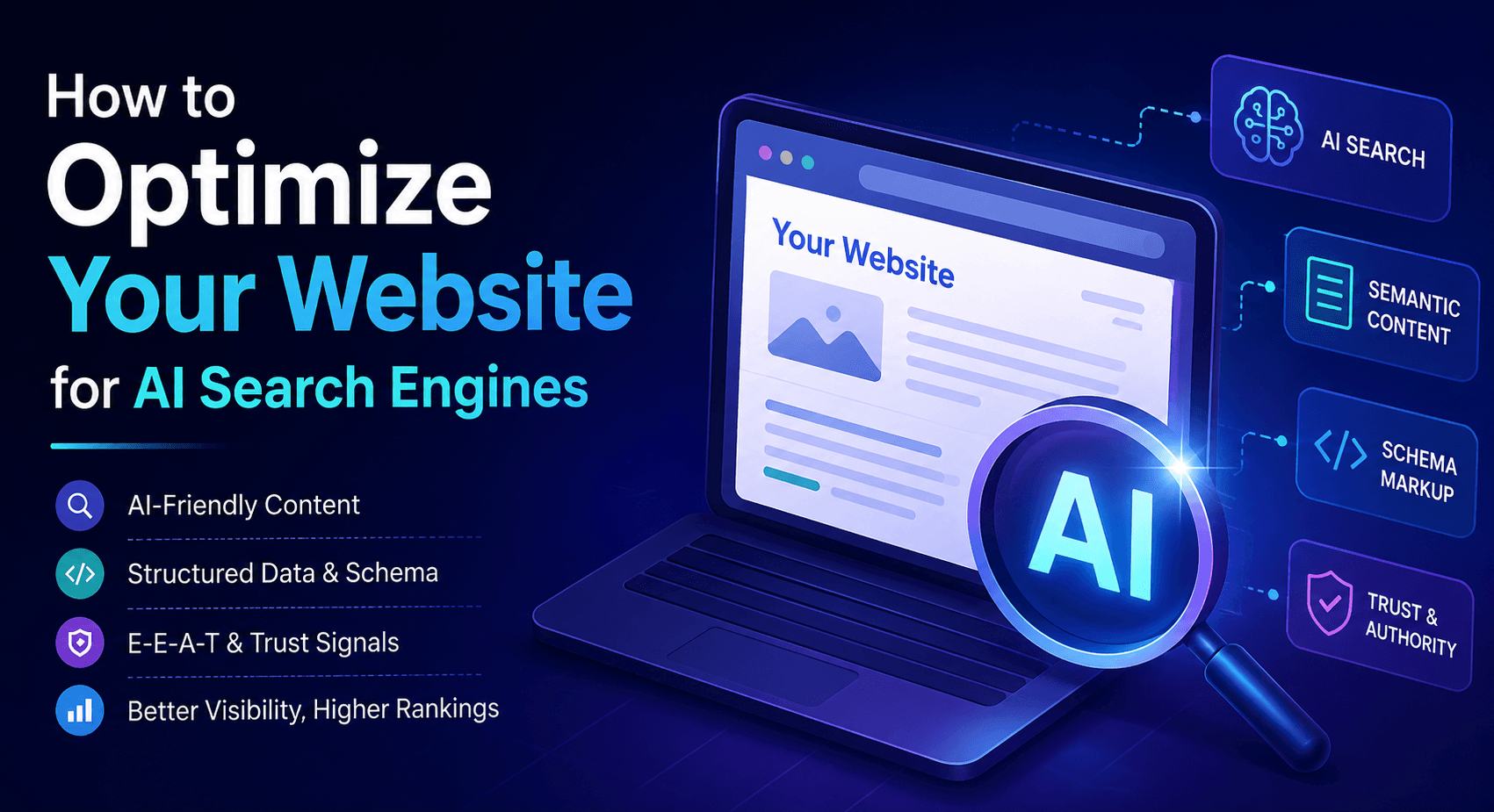
- Authority and trustworthiness: Content from well-established sources with a clear author or institutional backing tends to be favored. If your site has E-E-A-T signals (Experience, Expertise, Authoritativeness, Trustworthiness), this carries weight in generative contexts too.
- Direct, quotable answers: AI systems love content that answers a question clearly within the first few sentences of a section. Buried answers get buried responses.
- Use of data and citations: Pages that back up their claims with statistics, research findings, and named sources are far more likely to be cited in generated answers than opinion-heavy content without evidence.
- Structured, scannable formatting: Headings, defined terms, and logical flow help generative models parse your content accurately and extract the right information.
- Comprehensiveness without padding: Thin content, filler paragraphs, and generic advice are largely invisible to AI systems. Depth and genuine insight matter far more than word count alone.
GEO vs. Traditional SEO: Understanding the Difference
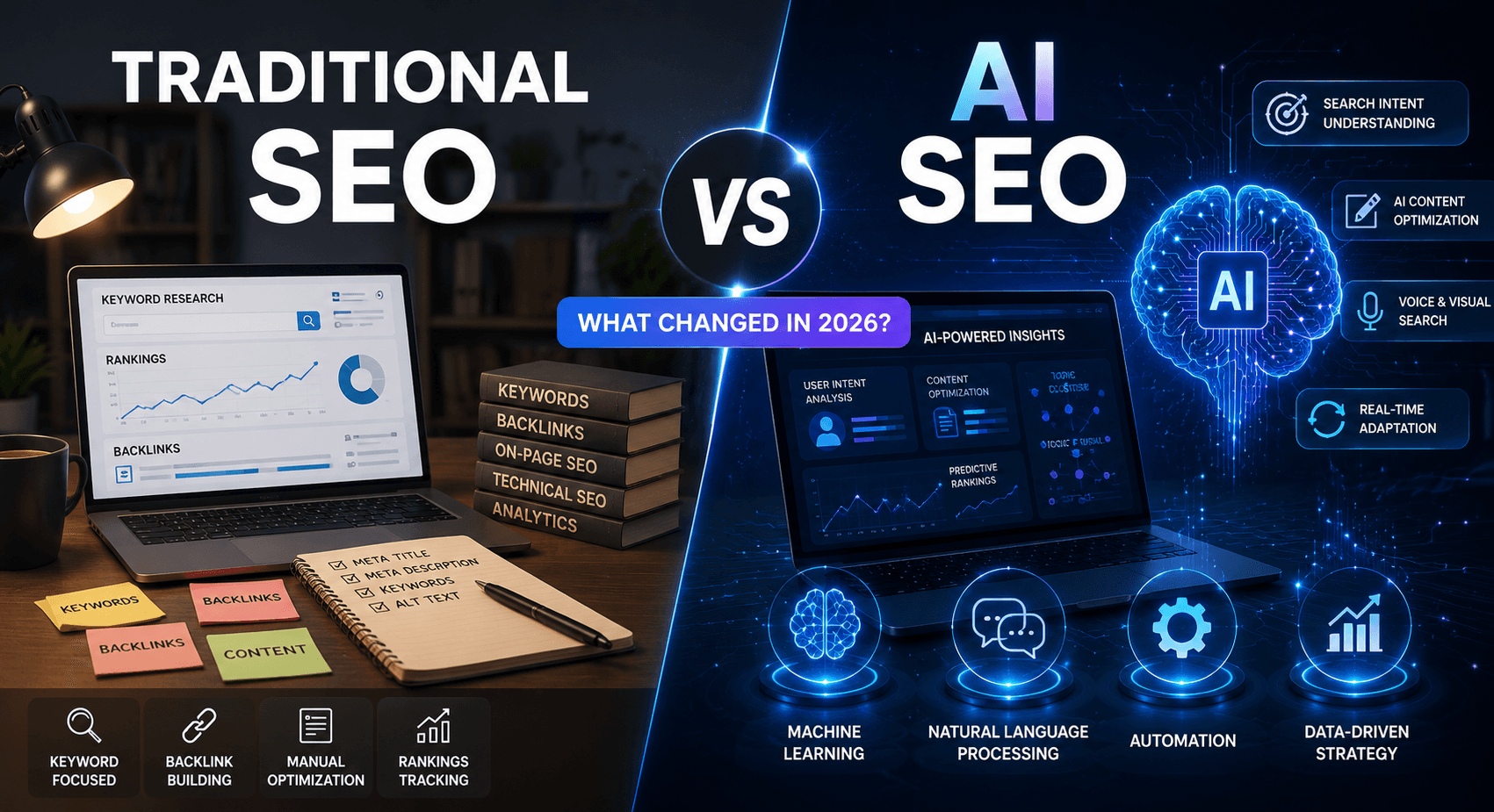
It would be a mistake to treat GEO and SEO as competing strategies. They share roots and many overlapping goals. But they diverge in meaningful ways that any serious digital marketer needs to understand.
- Optimizes for keyword ranking positions
- Success = page one visibility
- Traffic measured in clicks to your website
- Focus on backlink quantity and domain authority
- Content structured around search volume
- Results measured in sessions and bounce rates
- Optimizes to be cited in AI-generated answers
- Success = brand mentions in zero-click responses
- Influence measured in impressions and brand recall
- Focus on content authority and entity recognition
- Content structured around user intent and questions
- Results measured in branded search growth
In practical terms, a business that ranks second on a traditional search results page might get decent traffic. But if an AI Overview answers the user's question without listing any links, that second-place ranking becomes largely invisible. GEO is about being the answer — not just being near it.
The Core Pillars of a GEO Strategy
Building a GEO strategy does not mean scrapping everything you know about content marketing. It means adding a new layer of intentionality to how you create, structure, and distribute information. Here is how to approach it systematically.
Build Entity Authority
Generative AI systems understand the web through entities — recognizable people, organizations, products, and concepts. Make sure your brand is clearly defined across your website, your social profiles, your Wikipedia entry if applicable, and structured data markup. The more clearly AI can identify who you are and what you do, the more likely it is to reference you accurately.
Answer Questions Directly and Early
Identify the core questions your audience asks — not just in search bars, but in conversation. Write content that answers those questions in the opening paragraph of each section. Do not bury the lead. AI systems extract concise, direct answers and reward content that makes that extraction easy.
Back Every Claim With Evidence
Data-driven content consistently outperforms opinion-based writing in generative search contexts. Cite industry research. Reference credible third-party studies. Include statistics with their sources. This is not just good journalism — it is good GEO. AI systems are built to prefer verifiable, evidence-based content.
Write for Comprehension, Not Just Crawlers
The era of writing primarily for algorithms is fading. Generative models evaluate content much closer to how a skilled human reader would. Clear sentences, logical structure, and genuine depth of insight matter enormously. If a knowledgeable person reading your article would find it genuinely useful, there is a strong chance a generative AI will too.
Pursue Third-Party Mentions and Coverage
Being cited in other reputable publications, mentioned in industry reports, or referenced in expert interviews signals to AI systems that your brand is a legitimate authority. This is the GEO equivalent of link building — except instead of chasing links, you are building a reputation that machines can recognize and verify.
Why GEO Matters for Your Business Right Now
The urgency around GEO is not hype. Google's rollout of AI Overviews to billions of users globally has already begun shifting traffic patterns in measurable ways. Perplexity is growing its user base at a striking pace. ChatGPT is being used daily by hundreds of millions of people as a research and decision-support tool. The audience for AI-generated answers is not a niche — it is becoming the mainstream.
Businesses in competitive sectors — healthcare, finance, legal services, technology, e-commerce — are particularly exposed. When someone asks an AI assistant which type of mortgage suits their situation, which software platform to evaluate, or which service provider has the best reputation, the businesses that have invested in GEO will be cited. Those that have not will simply not exist in that conversation.
"In an age of AI-generated answers, the most powerful position a brand can hold is not a ranking — it is a reputation that machines recognize."
Measuring GEO Success
One honest challenge with GEO is measurement. Traditional SEO has clear metrics — rankings, organic traffic, click-through rates. GEO operates partly in zero-click territory, which means your brand might be referenced in thousands of AI answers without anyone visiting your website. That is influence without a traditional conversion path, and it requires a rethinking of how you define and track value.
Practical GEO metrics to monitor include:
- Branded search volume growth — are more people searching for your business by name?
- Direct traffic trends — are users arriving at your site because they already know who you are?
- Share of voice in AI answer monitoring tools (several have emerged specifically to track AI citations)
- Mentions in industry publications and third-party sources
- Customer acquisition surveys asking how prospects first heard of you
The Road Ahead
GEO is still a young discipline, and the tools, best practices, and measurement frameworks are evolving quickly. What is already clear, though, is the direction of travel. AI-powered search and information discovery are not a temporary experiment — they represent a structural shift in how people interact with digital information.
The brands that treat this moment as an opportunity rather than a threat will be the ones building durable authority in AI-generated conversations. They will be the names that come up when someone asks a generative engine for a recommendation, an explanation, or a solution. That is not a small advantage. In many industries, it will become the defining competitive edge of the next decade.
Getting started does not require a complete overhaul of your content strategy. It requires a shift in thinking — from writing for rankings to writing for recognition. From optimizing for crawlers to earning the trust of both human readers and the AI systems that learn from them. That shift, made deliberately and consistently, is what GEO is all about.
Key Takeaway
Generative Engine Optimization is the practice of making your brand, expertise, and content visible and credible within AI-generated search responses. As tools like Google AI Overviews, Perplexity, and ChatGPT reshape how people find information, GEO ensures that your business is part of the answer — not left out of the conversation. Start with authoritative content, clear answers, verifiable data, and a strong entity presence. Build from there.